
Okay, so you’re tossing around the idea of getting a pool, but the whole saltwater versus chlorine thing has got you scratching your head. You might have heard whispers about how kind saltwater pools can be to your skin and hair, and how they don’t demand as much upkeep, but you’re also conscious of the hefty price tag that comes with setting one up, and the possibility of it causing corrosion. On the other hand, the cost-effectiveness and easy maintenance of chlorine pools have piqued your curiosity, even though you’re wary of the strong chemicals used. It seems like a tricky choice to make, right? Well, let’s take a look at both to help you figure out what would suit your specific situation best.
Understanding Saltwater Pools
Saltwater pools, have you heard about them? They’re a bit different from the standard chlorine pools you might be used to. You see, they use a salt chlorine generator that changes salt into chlorine. This process is used to keep the water clean and safe for swimming, but it’s also gentler on your skin, eyes, and hair. That’s right, no more red eyes or dry skin after a swim. Plus, they don’t require as much upkeep.
Here’s how it works: the salt in the pool water gets turned into chlorine by the pool’s system. This means you don’t have to keep adding chemicals to keep it clean. It’s a big timesaver and it’s easier on your skin, especially if you’re a someone who has sensitive skin or allergies.
But, like anything, saltwater pools have their own issues. They might use fewer chemicals and require less upkeep, but they can be more expensive upfront and there’s a chance of corrosion. You’ll also need to regularly test the pH, free chlorine, and salt levels to make sure the pool stays healthy. So, before you go ahead and get a saltwater pool, make sure you think about the pros and cons. And remember, being well-informed is the best way to make a decision, especially when it comes to something as big as a pool.
Exploring Chlorine Pools
Let’s look at chlorine pools, a classic choice for many pool owners. You might be surprised to learn just why they’re so popular. They’re incredibly common and offer some unique features, which we’ll get into.
So what exactly is a chlorine pool? Well, these pools consistently maintain a level of chlorine to eliminate bacteria and keep algae at bay. A well-balanced pool typically holds 1 to 3 parts per million of chlorine.
And what about the pool system? Well, with a chlorine pool, you’ll have to manually add the chlorine yourself. This can be done using tablets, liquid, or granules.
Maintenance-wise, chlorine pools do require a bit more attention than their saltwater counterparts. Regular water testing and chlorine addition are part of the upkeep.
Now for a little trivia – did you know that chlorine is a halogen with the atomic number 17 on the periodic table? It’s a quirky fact that might help you feel a little more attached to your pool!
When it comes to choosing between chlorine pools and saltwater pools, it really boils down to what works best for you. Consider factors like your own personal preferences, how much maintenance you’re willing to take on, and what fits within your budget. The decision is entirely in your hands.
Pros and Cons: Saltwater Pools

Saltwater pools are often appreciated for their lower chemical content and offer a unique set of pros and cons that you should weigh up. On the plus side, because there’s less chlorine in these pools, they are kinder to your skin, eyes, and hair. Plus, the salt chlorine generator changes pool-grade salt into chlorine, reducing the need to buy and manually add store-bought chlorine. This means less maintenance work and can save you money in the long run.
But, there are downsides to saltwater pools too. Both saltwater and chlorine can corrode certain materials, so you might notice that some parts of the pool, particularly if they’re made of metal or natural stone, are more prone to corrosion. Also, the initial costs for setting up a saltwater system can be quite high. If the salt chlorine generator has to be repaired, it can be a costly affair, and having to run the pool filter all the time can bump up your energy bills.
When it comes to choosing between saltwater pools and chlorine pools, it’s worth noting that saltwater pools do still have chlorine in them, so you’d need to regularly check the pH and salt levels. Ultimately, the choice will depend on what you prefer and what suits your situation best.
Pros and Cons: Chlorine Pools
Let’s look at the upsides and downsides of chlorine pools.
- More Affordable to Start: When you’re deciding between a saltwater or chlorine pool, you’ll notice that the latter comes with a lower initial price tag. This could be a major plus if you’re trying to save some pennies.
- Easier to Look After: With a chlorine pool, you’re looking at a more straightforward upkeep routine. Keeping an eye on chlorine levels, popping in some chlorine tablets, and balancing the chemicals can all be done by yourself. This means you’ll be spending less on long-term maintenance.
- Kind to Your Pool Gear: Chlorine isn’t known to rough up pool equipment, which could mean your gear stays in good shape longer.
- Testing Water is a Breeze: The good news is, you can test the water yourself, which is super handy.
That being said, there are a couple of things you might not love about chlorine pools. For starters, some folks aren’t fans of the distinct chlorine smell, and it can be a bit harsh on the eyes. If you or your family members have sensitive skin or eyes, this could be a deal-breaker.
Cost Analysis: Saltwater Vs Chlorine Pools
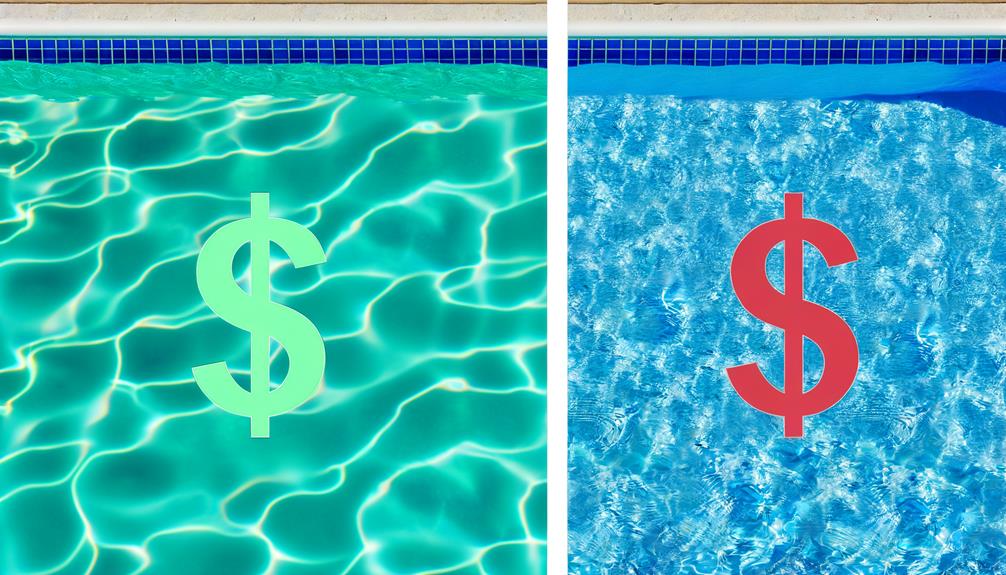
Let’s talk money and pools. Starting with saltwater pools, these require a more substantial initial investment but end up being more cost-effective in the long run due to lower maintenance costs. In contrast, chlorine pools cost less to install but their upkeep can add up due to frequent maintenance.
Switching from a traditional chlorine pool to saltwater can range in cost from $1,500 to $2,500. The salt cell, a critical component of a saltwater system, will eventually need replacing, adding to your expenses. Despite this, saltwater systems can be cost-effective in the long term. They use fewer chemicals and require less upkeep, which saves you money over time.
If we look at chlorine pools, the filter system is cheaper upfront, usually setting you back between $300 to $800. But don’t let that fool you. The continuous costs of purchasing chlorine and other chemicals, alongside more frequent maintenance, can increase your expenses over time.
Frequently Asked Questions
Which Is Better Chlorine or Salt Water Pool?
So, you’re weighing up the pros and cons of chlorine and saltwater pools, right? Well, it’s really up to personal taste. With chlorine pools, you’re looking at less of an initial hit to your wallet, but they do need more care and attention in the long run. On the other hand, saltwater pools can be kinder to your skin, but they might cause some materials to break down over time. What feels right for you?
What Is Downside of Salt Water Pool?
Saltwater pools might have an initial high cost and even their maintenance can be a bit pricey. Not to mention the potential wear and tear on the pool equipment and the deck. But, you know what? A lot of folks absolutely adore the smooth feel of the water and the fact that it’s less harsh on the skin.
Are Salt Water Pools Healthier for You?
Saltwater pools can be a better choice for your health. They are milder on your skin, eyes, and hair which makes for a more comfortable swim. Plus, you get to steer clear of those pesky chemicals that can sometimes stir up irritations. So, it’s not just about taking a dip, it’s also about taking care of yourself.
What Is the Healthiest Type of Pool?
So, you’re wondering what the most beneficial pool type might be? That’s not an easy question to answer. There are several factors to consider such as personal health, the amount of upkeep required, and the cost. It’s a good idea to examine all your options before you decide to take the leap and install a pool.
Need a hand with this? JK Pools and Spa has been maintaining, cleaning and repairing pools across the Lower Mainland for more than 20 years. Whether you want pool chemicals and water balancing or a regular service visit in Surrey, call 778-990-4539 or get in touch.
We also serve Surrey, BC and the surrounding area.
Written by Jeff Kingdon, owner of JK Pools and Spa. Jeff has maintained, cleaned and repaired pools across Surrey, Langley, Maple Ridge and White Rock for more than 20 years. If you would like a professional opinion on your own pool, get in touch or read more about Jeff and the business.